
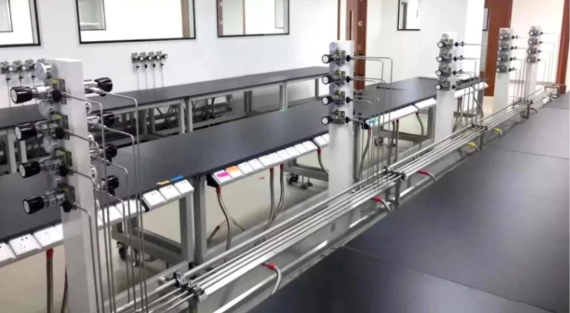
Introduction to Laboratory Gas Pipeline Design
Designing an efficient Laboratory Gas Distribution System is one of the most critical components of any modern scientific facility. Whether it is a research laboratory, a pharmaceutical manufacturing unit, a chemical testing facility, or an academic institution, gas supply plays an important role in day-to-day operations. A properly engineered gas pipeline system ensures uninterrupted gas flow, stabilizes pressure levels, prevents contamination, and significantly enhances workplace safety. As laboratories increasingly rely on high-purity gases for sensitive applications, the importance of a robust gas distribution setup becomes even more pronounced.
A well-designed laboratory gas pipeline system begins with understanding the specific needs of the facility, the type of gases being used, and the required purity levels. It must incorporate the right materials, advanced safety features, reliable components, and an efficient routing plan. In addition, pipeline systems need to be compliant with international standards and equipped with automation technologies for monitoring pressure, detecting leaks, and managing usage patterns. The goal is to reduce manual intervention, minimize operational risks, and ensure the highest level of performance.
A modern Lab Gas Distribution System also focuses on efficiency and scalability. Laboratories are dynamic environments that evolve with time, requiring flexible gas distribution solutions that can support future expansions without major redesigns. Therefore, best practices in laboratory gas pipeline design emphasize long-term efficiency, ease of maintenance, flexibility, and robust safety protocols. This article delves into a detailed exploration of these best practices, offering actionable insights on material selection, layout planning, compliance, automation, maintenance, and more. By following these practices, laboratories can create a safe and efficient ecosystem that supports quality research, accurate results, and operational excellence.
1. Understanding Laboratory Gas Requirements
Before designing a Laboratory Gas Distribution System, it is crucial to thoroughly understand the gas requirements of the facility. Every laboratory has a unique operational structure, so studying the specific needs helps ensure that the pipeline design is both functional and future-ready. The first step involves identifying the types of gases being used—such as nitrogen, helium, hydrogen, oxygen, argon, carbon dioxide, and various specialty gases. Each gas comes with its own set of purity, pressure, and flow-rate characteristics that directly influence pipeline material, routing, and component selection.
It is also essential to analyze how often gases are consumed and whether usage fluctuates throughout the day. Some labs operate continuously, while others have peak usage hours, which may lead to pressure drops if the system is not adequately designed. Understanding the frequency of usage helps in determining the correct line sizes, cylinder bank capacity, and distribution pressure.
Additionally, laboratories often use gases for multiple applications, including instrument calibration, analytical testing, chemical reactions, environmental simulation, and high-purity research. Each of these applications may require different pressure levels or different grades of purity. For example, GC and LC-MS labs require ultra-high-purity gases, while a general testing lab may not need the same level of purity.
Another important factor is future scalability. A good lab gas pipeline design should allow easy expansion as the laboratory grows. This includes adding provision lines, spare capacity in manifolds, and adaptable routing paths. By accurately assessing present and future gas requirements, laboratories can avoid costly modifications later and ensure a stable, uninterrupted supply. The more accurately these needs are understood, the more effectively the Lab Gas Pipeline System can be designed to deliver consistent, safe, and reliable gas distribution.
2. Choosing the Right Pipeline Material
Material selection is one of the most important decisions in designing a Laboratory Gas Distribution System. The material used for pipelines directly influences the purity, safety, and longevity of the entire system. The most commonly used materials include copper, stainless steel, and specialized polymers such as PTFE or PFA. Each material is suitable for specific gas types and applications, and selecting the wrong material can lead to contamination, leaks, or even dangerous reactions.
Stainless steel, particularly grades SS316 and SS304, is widely preferred for high-purity and corrosive gases. Its superior corrosion resistance, smooth internal surface, and strength make it ideal for maintaining gas purity. Stainless steel tubing with orbital welding ensures a clean, leak-proof connection that prevents contamination and maintains flow consistency. For laboratories using specialty or reactive gases, stainless steel remains the top choice.
Copper tubing, while widely used in traditional lab settings, is better suited for non-reactive gases like nitrogen or helium. However, copper should never be used with gases like ammonia or acetylene due to chemical incompatibility. Although copper lines are easier to install, they are prone to corrosion over time and require careful maintenance.
For certain applications, especially where flexibility is needed, PTFE or PFA tubing can be used. These materials are chemically inert and suitable for low-pressure applications. However, they may not offer the durability required for high-pressure or high-purity gases.
Another critical aspect is ensuring that all pipeline fittings, valves, regulators, and manifolds are compatible with the chosen material. Using mixed or incompatible components can lead to leaks and performance issues. Ultimately, choosing the right material ensures a long-lasting, contamination-free, and highly efficient Lab Gas Pipe Installation system that supports the lab’s operational goals and safety standards.
3. Implementing a Centralized Gas Distribution Layout
A centralized Laboratory Gas Distribution System layout is considered a best practice because it significantly enhances safety, efficiency, and maintenance simplicity. In a centralized system, all gas cylinders, manifolds, gas panels, and safety devices are stored in a dedicated gas room located outside the laboratory workspace. From this centralized location, pipelines transport gases to various workstations, instruments, and lab zones. This arrangement reduces clutter, minimizes cylinder handling inside the lab, and improves overall safety.
Centralized gas distribution ensures consistent pressure and purity levels throughout the facility. Since gas cylinders are located in a controlled environment, risks like accidental damage, temperature variations, and exposure to heat sources are greatly minimized. The gas room can be equipped with ventilation, safety alarms, and fire suppression systems to further enhance safety.
When planning the layout, it is essential to design the shortest and most efficient routing path from the gas room to each laboratory section. Longer routes can cause pressure drops or require additional regulators and boosters. The routing should avoid high-heat areas, electrical panels, or mechanical systems. Gas pipelines must also be segregated based on gas type—flammable, non-flammable, oxidizers, and toxic gases should have dedicated paths or compartments to avoid cross-contamination or safety risks.
Labeling and color coding gas lines are extremely important in centralized systems. Every pipeline should clearly indicate the gas type, flow direction, and pressure rating. This makes maintenance easier and enhances safety during emergencies. Additionally, centralized systems simplify cylinder replacement because the gas room is easily accessible and safely ventilated. Overall, a centralized Lab Gas Distribution System offers better control, reduced downtime, and enhanced safety, making it the preferred choice for modern laboratory environments.
4. Using High-Quality Regulators, Valves, and Manifolds
The performance of a Laboratory Gas Distribution System depends significantly on the quality of its components—especially regulators, valves, gas panels, and manifolds. These components control gas flow, pressure levels, and distribution across different workstations. Using substandard or incompatible parts can lead to leaks, contamination, pressure fluctuations, and potential accidents. Therefore, laboratories must invest in certified, high-precision, and corrosion-resistant components designed specifically for laboratory environments.
Pressure regulators are essential for maintaining consistent output pressure from high-pressure cylinders or centralized tanks. They must be chosen based on the gas type, purity grade, and required pressure range. Dual-stage regulators are widely recommended for high-purity gases because they reduce pressure gradually, ensuring stable flow. Valves—such as needle valves, isolation valves, and non-return valves—help control or restrict flow and must be leak-proof and durable.
Manifolds play a crucial role in connecting multiple cylinders to maintain an uninterrupted gas supply. Automatic changeover manifolds are preferred because they switch seamlessly between empty and full cylinders without affecting pressure levels. Gas panels, equipped with pressure gauges, purifiers, and safety devices, provide centralized control and monitoring for each gas line.
All components must be made from compatible materials, preferably stainless steel for high-purity or corrosive gases. It is equally important to ensure that fittings and connections match the pipeline material to avoid galvanic reactions or leaks. Poor-quality components not only compromise the efficiency of the Lab Gas Pipeline System but can also cause dangerous pressure spikes or contamination that affects research outcomes.
High-quality components ensure longer service life, reduce maintenance frequency, and improve overall system reliability. They also support future expansions, allowing laboratories to modify or upgrade gas lines without replacing the entire infrastructure. Investing in premium components is a long-term decision that guarantees consistent, safe, and efficient gas distribution.
5. Ensuring Proper Pipeline Routing and Installation
Proper installation and routing are essential for maintaining the performance and safety of a Laboratory Gas Distribution System. Even when the correct materials and components are chosen, a poorly planned installation can lead to gas leaks, pressure loss, contamination, and long-term maintenance challenges. Pipeline routing must be carefully designed to balance efficiency, safety, accessibility, and aesthetics.
The routing path should be as direct as possible to minimize pressure drops and reduce potential failure points. Sharp bends and unnecessary directional changes should be avoided. Pipelines should be installed away from heat sources, electrical systems, and mechanical equipment to prevent temperature fluctuations or accidental damage. Running gas lines in ceiling trays or dedicated conduits is recommended for both protection and better organization.
Another essential practice is keeping different gas types separated. Flammable gases should not share the same routing path as oxidizers. Toxic gases may require double containment systems or separate conduits. Proper segregation prevents cross-contamination and enhances overall safety.
Every pipeline must be clearly labeled with gas type, pressure rating, and flow direction. Color coding and standardized labels ensure that technicians and emergency responders can identify gas lines quickly. It is equally important to ensure that pipelines remain accessible for inspections and maintenance. Concealed pipes may look aesthetically pleasant but can make leak detection difficult.
Installation should always be carried out by trained professionals using techniques such as orbital welding for stainless steel lines. This method ensures clean, smooth welds without oxidation, greatly reducing the risk of contamination or leaks. After installation, pressure tests, leak tests, and purity tests must be performed before commissioning the system.
Proper routing and installation create a reliable Lab Gas Pipe Installation that supports efficient laboratory operations while ensuring safety and long-term performance.
6. Integrating Safety Systems and Compliance Standards
Safety is the foundation of any Laboratory Gas Distribution System, and compliance with international standards ensures the safe handling and use of various laboratory gases. Laboratories must adhere to guidelines set by NFPA (National Fire Protection Association), OSHA (Occupational Safety and Health Administration), ISO standards, and local safety codes. Integrating safety measures from the design phase minimizes risks and supports regulatory compliance.
One of the most important safety practices is proper ventilation. Gas cylinders stored in centralized gas rooms must have adequate airflow, exhaust systems, and gas leak detectors. Toxic or flammable gases require advanced detection systems that can immediately alert technicians of leaks or abnormal pressure levels. Emergency shut-off valves must be installed at accessible locations to quickly isolate gas supply during emergencies.
Cylinder storage practices must follow strict guidelines. For example, flammable gases should be separated from oxidizing gases, and all cylinders must be secured using chains or brackets. Temperature control, grounding, and protective barriers further enhance safety.
Pipeline safety requires the installation of check valves, pressure relief valves, flashback arrestors, and purifiers. These components prevent backflow, overpressure, and ignition risks. Proper labeling and signage ensure that personnel are aware of potential hazards associated with each gas line.
Compliance also includes regular inspections, maintenance logs, and internal safety audits. Staff must be trained in safe gas handling, emergency response, and routine checks. Safety workshops and training sessions ensure that laboratory personnel understand the importance of adhering to guidelines.
By integrating these safety measures, laboratories can ensure that their Lab Gas Distribution System remains secure, compliant, and reliable. Adhering to standards not only protects personnel but also preserves the integrity of experiments and equipment.
7. Installing Monitoring and Automation Technology
Modern laboratories are increasingly adopting automation technologies to enhance the performance of their Laboratory Gas Distribution System. Integrating monitoring equipment and automation tools ensures precise gas flow, real-time pressure control, and quick response to potential hazards. Automation enhances system accuracy while reducing manual intervention, making laboratory operations more reliable and efficient.
Digital pressure gauges, flow meters, and integrated sensors can continuously monitor gas levels throughout the distribution system. These devices provide real-time insights into pressure fluctuations, flow irregularities, and potential leaks. When linked to centralized monitoring software, laboratory managers can track gas usage, maintain consumption logs, and optimize supply planning.
Leak detection technology is particularly important. Advanced systems can detect even the smallest leaks using ultrasonic, infrared, or electrochemical sensors. Once detected, alarms or notifications can be automatically triggered, alerting personnel immediately. Some systems also include automatic shut-off valves that isolate problematic sections to prevent accidents.
Automation also supports predictive maintenance. Through data analytics, the system can predict when regulators, valves, or pipelines may require servicing or replacement. This reduces downtime, minimizes operational disruptions, and ensures long-term system reliability.
In high-end laboratories, IoT-enabled gas pipeline systems offer remote monitoring capabilities. Managers can track performance metrics from anywhere using mobile or desktop interfaces. Such systems also allow users to adjust pressure settings remotely, respond to alerts, and review historical usage patterns.
By integrating automation and monitoring technologies, laboratories significantly improve the safety, efficiency, and intelligence of their Lab Gas Distribution System. Automation reduces human errors, enhances overall system performance, and ensures that the gas pipeline infrastructure operates at peak efficiency.
8. Planning for Easy Maintenance and Future Expansion
A well-designed Laboratory Gas Distribution System must support long-term maintenance and offer the flexibility for future expansion. Laboratories often upgrade their equipment, add new instruments, or expand operational facilities. Therefore, gas pipeline systems should be designed with scalability and accessibility in mind.
Maintenance begins with ensuring that all pipelines remain accessible for inspections. Concealing pipelines behind walls may look visually appealing but can complicate leak detection, repairs, and component replacement. Instead, using accessible conduits, ceiling trays, or dedicated utility shafts ensures that maintenance tasks can be performed quickly and safely.
Regular inspections should include pressure tests, leak tests, and component evaluations. Regulators, valves, manifolds, and purifiers may require periodic calibration or replacement. Maintaining a clear maintenance log helps track the system’s performance and ensures compliance with safety regulations.
When designing a pipeline system, laboratories should include spare lines or provisions for adding new gas types in the future. Oversizing manifolds or including additional ports ensures that new equipment can be connected without redesigning the entire layout. Provisioning for future gas cabinets, expansion of cylinder banks, and additional gas panels is also beneficial.
Another key aspect is ensuring that all components are modular. Modular designs make it easy to replace parts without interrupting the entire system. Using standardized components ensures compatibility and simplifies inventory management.
Future expansion planning also includes digital upgrades. Laboratories may want to add advanced monitoring tools, automation devices, or IoT sensors later. Ensuring compatibility with these technologies enhances long-term scalability.
By prioritizing both maintenance and expansion needs, laboratories ensure their Lab Gas Pipeline System remains reliable, future-proof, and efficient for years to come.
Conclusion
Designing an effective Laboratory Gas Distribution System involves careful planning, high-quality materials, strict safety protocols, and long-term vision. From understanding gas requirements to selecting the right pipeline material, every decision influences the performance and safety of the entire facility. A robust lab gas pipeline system enhances accuracy, ensures purity, reduces operational risks, and maintains consistent gas flow for sensitive laboratory operations.
Centralized gas distribution, proper routing, and the use of high-precision components ensure the system’s efficiency and reliability. The integration of automation technologies adds an extra layer of safety and performance monitoring, enabling laboratories to operate smoothly with minimal manual intervention. Safety compliance remains essential throughout the process, ensuring that the system adheres to national and international standards.
Finally, planning for maintenance and future expansion helps laboratories adapt to changing needs without costly redesigns. A well-designed system not only supports current operations but also accommodates technological advancements and facility upgrades.
By adopting these best practices, laboratories can build a gas pipeline system that is safe, efficient, scalable, and capable of supporting advanced scientific research. The result is a highly functional Lab Gas Distribution System that enhances laboratory performance, ensures regulatory compliance, and creates a safe environment for researchers and technicians.