Cleanroom standards are a set of guidelines and regulations for creating and maintaining a controlled environment in industries such as pharmaceuticals, microelectronics, and biotechnology. The standards are designed to minimize contamination and ensure the highest level of quality and consistency in production.
The most commonly referenced cleanroom standards are those developed by the International Organization for Standardization (ISO). The ISO standards define the air cleanliness, pressure differentials, and other environmental parameters required for each classification of cleanroom.
Call Us Get Quote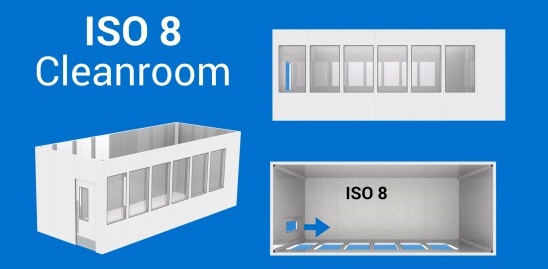
Let’s assume that an unclassified space (office or lab) is ISO 9. In this case, you can directly enter an ISO 8 cleanroom, without an airlock. Depending on the production process inside the cleanroom, however, you may have to add a gowning room.
Non-unidirectional air flow
Some of our ISO 8 Cleanroom past projects :
ISO 8 cleanroom for Pharmaceutical Manufacturing
Cleanroom for Pharmaceutical Industry
Cleanroom wall addition for Medtech Manufacturer
ISO 8 cleanroom for Medical Device Manufacturing
ISO 8 cleanroom for the Automotive Industry


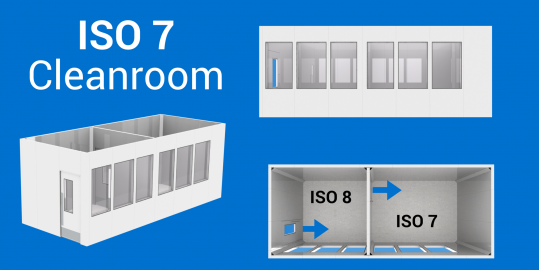
This is one of the most common classes of cleanrooms. If you need an ISO 7 cleanroom, you should consider having an ISO 8 airlock/gowning room prior to entering the ISO 7 room. The air changes per hour will vary in both rooms as described below.
Non-unidirectional air flow
Some of our ISO 7 Cleanroom past projects :
Clinical Manufacturing Facility for Cell and Gene Therapy – CGMP cleanroom
ISO 7 cleanroom for Electronic Component Production
ISO 7 cleanroom for Nutraceutical Industry
Clinical Trials – Drug Development cleanroom
ISO 7 sterile compounding non-hazardous facility
In-Hospital compounding cleanroom – ISO 7 ( USP-797 )
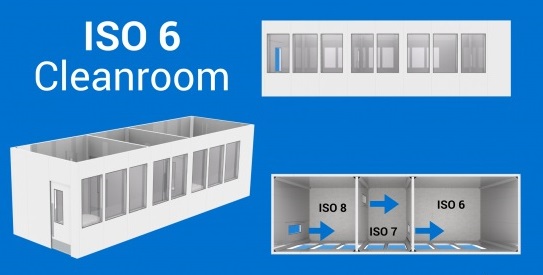
In theory, for an entire room to reach ISO 6 air cleanliness, you need to enter the cleanroom via an ISO 8 (ante-room), then go through an ISO 7, to finally get into the ISO 6, as shown in the image.
In reality however, you can reach an ISO 6 cleanroom with 1 (recommendation is 2) airlock. Again, it depends of the size of the room, the process taking place inside the cleanroom, the number of people working inside, the equipment inside, etc.
Unidirectional air flow is sometimes recommended to reach ISO 6 classification. For a room of less than 4–6 meters in width (depending on the activities taking place inside the cleanroom), air returns can be positioned on the side of the walls instead of in the floor. Installing air returns in the floor is more expensive.
Some of our ISO 6 Cleanroom past projects :
ISO 6 cleanroom for semiconductor
Cleanroom for electronics manufacturing services ( ISO 6 )
ISO 6 Cell Production cleanroom for animal laboratory
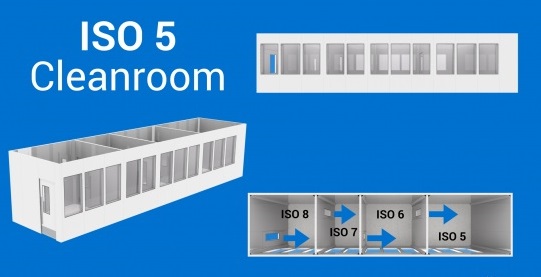
In theory, for a classified room (not just below a LAFW hood) to reach ISO class 5 air cleanliness, you need to enter the cleanroom via an ISO 8 (ante-room), then go through an ISO 7, followed by an ISO 6 to finally get into the ISO class 5 cleanroom.
In reality, however, you can reach an ISO 5 cleanroom with 2 or 3 airlocks. The optimal layout depends on the process taking place inside the cleanroom, the size of the room, the number of people working inside, the equipment inside, etc.
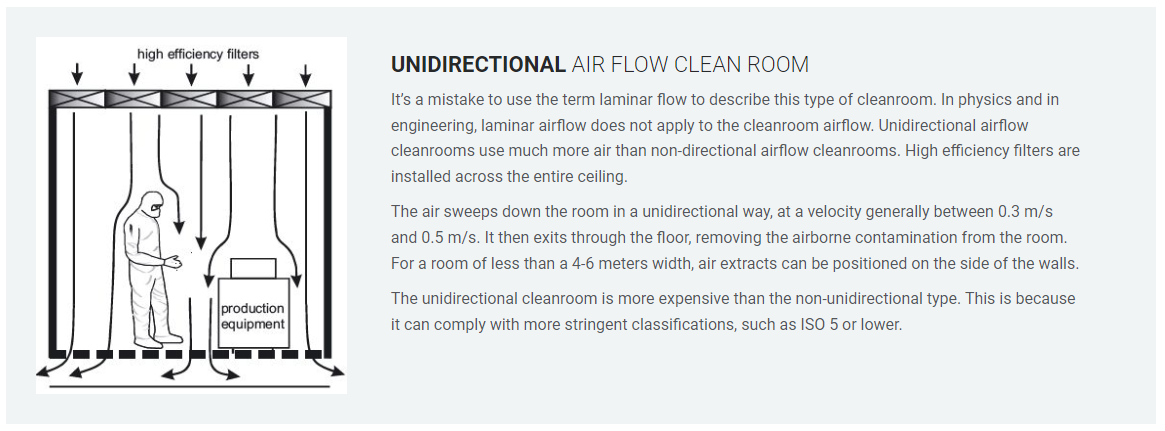
In addition, an ISO 5 or class 100 clean room needs to use unidirectional air flow. Unidirectional air flow cleanrooms use much more air than non-directional air flow cleanrooms. High efficiency filters are installed across the entire ceiling.
The filtered air sweeps down the room in a unidirectional way, at a velocity generally between 0.3 m/s and 0.5 m/s, and exits through the floor, removing the airborne contamination from the room. Cleanrooms using unidirectional air flow are more expensive than non-unidirectional ones, but can comply with more stringent classifications, such as ISO 5 or lower.
Some of our ISO 5 Cleanroom past projects :
ISO 5 Nanofabrication cleanroom facility
IT’S ALL ABOUT AIR FLOW PRINCIPLES
Let’s assume that an unclassified space (office or lab) is ISO 9. In this case, you can directly enter an ISO 8 cleanroom, without an airlock. Depending on the production process inside the cleanroom, however, you may have to add a gowning room.
Non-unidirectional air flow
Some of our ISO 8 Cleanroom past projects :
ISO 8 cleanroom for Pharmaceutical Manufacturing
Cleanroom for Pharmaceutical Industry
Cleanroom wall addition for Medtech Manufacturer
ISO 8 cleanroom for Medical Device Manufacturing
ISO 8 cleanroom for the Automotive Industry
This is one of the most common classes of cleanrooms. If you need an ISO 7 cleanroom, you should consider having an ISO 8 airlock/gowning room prior to entering the ISO 7 room. The air changes per hour will vary in both rooms as described below.
Non-unidirectional air flow
Some of our ISO 7 Cleanroom past projects :
Clinical Manufacturing Facility for Cell and Gene Therapy – CGMP cleanroom
ISO 7 cleanroom for Electronic Component Production
ISO 7 cleanroom for Nutraceutical Industry
Clinical Trials – Drug Development cleanroom
ISO 7 sterile compounding non-hazardous facility
In-Hospital compounding cleanroom – ISO 7 ( USP-797 )
In theory, for an entire room to reach ISO 6 air cleanliness, you need to enter the cleanroom via an ISO 8 (ante-room), then go through an ISO 7, to finally get into the ISO 6, as shown in the image.
In reality however, you can reach an ISO 6 cleanroom with 1 (recommendation is 2) airlock. Again, it depends of the size of the room, the process taking place inside the cleanroom, the number of people working inside, the equipment inside, etc.
Unidirectional air flow is sometimes recommended to reach ISO 6 classification. For a room of less than 4–6 meters in width (depending on the activities taking place inside the cleanroom), air returns can be positioned on the side of the walls instead of in the floor. Installing air returns in the floor is more expensive.
Some of our ISO 6 Cleanroom past projects :
ISO 6 cleanroom for semiconductor
Cleanroom for electronics manufacturing services ( ISO 6 )
ISO 6 Cell Production cleanroom for animal laboratory
In theory, for a classified room (not just below a LAFW hood) to reach ISO class 5 air cleanliness, you need to enter the cleanroom via an ISO 8 (ante-room), then go through an ISO 7, followed by an ISO 6 to finally get into the ISO class 5 cleanroom.
In reality, however, you can reach an ISO 5 cleanroom with 2 or 3 airlocks. The optimal layout depends on the process taking place inside the cleanroom, the size of the room, the number of people working inside, the equipment inside, etc.
In addition, an ISO 5 or class 100 clean room needs to use unidirectional air flow. Unidirectional air flow cleanrooms use much more air than non-directional air flow cleanrooms. High efficiency filters are installed across the entire ceiling.
The filtered air sweeps down the room in a unidirectional way, at a velocity generally between 0.3 m/s and 0.5 m/s, and exits through the floor, removing the airborne contamination from the room. Cleanrooms using unidirectional air flow are more expensive than non-unidirectional ones, but can comply with more stringent classifications, such as ISO 5 or lower.
Some of our ISO 5 Cleanroom past projects :
ISO 5 Nanofabrication cleanroom facility
IT’S ALL ABOUT AIR FLOW PRINCIPLES