
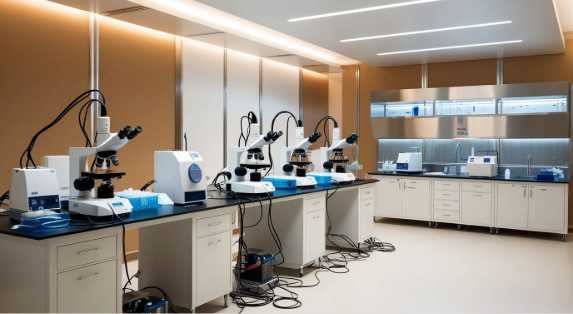
Introduction: The Evolution of Laboratory Furniture & Solutions
Laboratories have always been the epicenters of research, innovation, and scientific advancement. Over the years, as research methodologies have grown increasingly complex, the demand for efficient, safe, and adaptive lab spaces has intensified. Central to this transformation is Laboratory Furniture & Solutions, which serve not merely as functional components but as strategic enablers of productivity, safety, and collaboration. Modern laboratories are no longer static environments with rigid layouts; they have become dynamic spaces that must accommodate advanced instrumentation, digital tools, and flexible workflows.
The evolution of laboratory furniture is driven by multiple factors. Increasingly stringent safety standards require chemical-resistant, fire-retardant, and ergonomically designed furniture. Simultaneously, the advent of smart lab technologies, IoT integration, and automation systems necessitates furniture that can seamlessly support digital devices and connected instruments. Modularity has emerged as a crucial feature, allowing workspaces to be reconfigured quickly as research priorities shift. Moreover, sustainability concerns are prompting laboratories to adopt eco-friendly furniture made from recyclable materials and low-VOC finishes.
With research teams working longer hours and handling increasingly sensitive experiments, ergonomics and human-centered design have become integral considerations. Properly designed Laboratory Furniture & Solutions enhance comfort, reduce fatigue, and prevent workplace injuries, contributing to better research outcomes. In this context, laboratories of the future will be defined by adaptability, intelligence, sustainability, and user-centered design. This article explores the key trends shaping the future of laboratory furniture and smart lab design, highlighting innovations that promise to redefine how labs function and evolve in the coming decade. By understanding these trends, organizations can make informed decisions when investing in laboratory infrastructure that is both future-proof and productivity-enhancing.
Trend 1: Modular & Flexible Laboratory Furniture Systems
One of the most significant trends in laboratory furniture design is modularity. Modular laboratory furniture systems are transforming how labs are planned, built, and maintained, offering flexibility that traditional, fixed layouts cannot provide. With modular furniture, laboratories can be reconfigured efficiently to adapt to changing research priorities, evolving workflows, or new technological requirements. This flexibility is particularly critical in research environments such as pharmaceutical R&D, biotechnology, and diagnostic laboratories, where project scopes can change rapidly.
Modern modular furniture solutions include workbenches with adjustable heights, mobile storage cabinets, interchangeable countertops, and service panels that allow utilities such as gas, water, and electricity to be repositioned easily. Such adaptability ensures that laboratories can scale up or down without extensive civil work, saving time and cost while maintaining safety and compliance standards. Furthermore, modular furniture is designed with integration in mind, enabling seamless compatibility with laboratory instruments, automation systems, and IoT devices.
Another advantage of modular laboratory furniture is its contribution to sustainability and resource efficiency. Furniture components can often be reused, repurposed, or relocated to other areas of the laboratory or facility, reducing waste and minimizing procurement costs. Manufacturers are increasingly offering modular solutions in chemical-resistant materials, stainless steel, and epoxy resin to ensure durability, safety, and aesthetic appeal. By investing in modular Laboratory Furniture & Solutions, laboratories gain the ability to create adaptable, future-ready workspaces that can evolve with scientific and technological advancements. This trend highlights the growing importance of flexibility, efficiency, and smart planning in modern laboratory design.
Trend 2: Ergonomic & Human-Centric Laboratory Furniture
Ergonomics has emerged as a central consideration in laboratory furniture design, reflecting a broader trend toward human-centric, wellness-oriented work environments. Laboratory researchers and technicians often spend long hours performing repetitive tasks, handling delicate instruments, and monitoring experiments that require high levels of concentration. Poorly designed workstations can lead to fatigue, musculoskeletal injuries, and reduced productivity, which makes ergonomically designed Laboratory Furniture & Solutions essential for both safety and efficiency.
Modern ergonomic laboratory furniture includes height-adjustable benches, anti-fatigue mats, sit-stand workstations, and chairs specifically designed to support proper posture. Rounded work surfaces, adjustable shelving, and user-friendly storage systems reduce strain and make laboratory activities safer and more comfortable. Ergonomics also extends to workflow optimization, ensuring that frequently used instruments and materials are within easy reach to minimize repetitive bending, stretching, or twisting motions.
Moreover, ergonomics intersects with the digital evolution of laboratories. As labs integrate digital instruments, monitors, and IoT devices, workstations must be designed to accommodate screens, devices, and cables without causing clutter or limiting movement. Adjustable furniture ensures that equipment placement can be modified to suit different user needs and research processes. By prioritizing ergonomics, laboratories enhance researcher well-being, increase operational efficiency, and reduce errors caused by fatigue. Human-centric Laboratory Furniture & Solutions are not just a luxury—they are a necessity for laboratories seeking to optimize performance, maintain compliance with occupational safety standards, and attract and retain skilled personnel.
Trend 3: Technology-Integrated Laboratory Furniture
The convergence of laboratory design and digital technology has given rise to technology-integrated laboratory furniture, which is increasingly being adopted in smart labs worldwide. These furniture systems are designed not only to support equipment and storage needs but also to integrate seamlessly with digital monitoring systems, automation equipment, and IoT-enabled devices. This ensures that laboratories remain organized, efficient, and capable of supporting advanced scientific operations.
Key features of technology-integrated furniture include embedded power and data rails, built-in cable management, IoT sensors for environmental monitoring, and charging stations for instruments and devices. Such integration reduces clutter, prevents accidental damage to cables and devices, and ensures that the laboratory workspace is optimized for both safety and operational efficiency. Additionally, furniture designs that accommodate automation systems, robotics, and digital dashboards enable laboratories to maximize workflow efficiency while maintaining compliance with electrical and fire safety regulations.
Technology integration also allows laboratory managers to collect real-time data on space utilization, equipment performance, and environmental conditions, which can inform decisions about workflow optimization, resource allocation, and preventive maintenance. By adopting technology-ready Laboratory Furniture & Solutions, laboratories future-proof their operations, improve productivity, and enhance the adaptability of their spaces. This trend underscores the importance of designing furniture that does more than provide physical support—it must actively contribute to the intelligence, connectivity, and efficiency of the modern laboratory environment.
Trend 4: Sustainable & Eco-Friendly Laboratory Furniture
Sustainability has become a central concern in laboratory design, influencing choices in furniture materials, production processes, and lifecycle management. Laboratories worldwide are increasingly adopting eco-friendly Laboratory Furniture & Solutions to minimize environmental impact, comply with green building standards, and achieve corporate sustainability goals. Environmentally responsible furniture supports the creation of safer, healthier work environments while promoting long-term cost efficiency.
Sustainable laboratory furniture is typically made from recyclable or responsibly sourced materials such as stainless steel, powder-coated metals, and low-VOC finishes. Manufacturers are also exploring innovative materials like recycled plastics and renewable composites that provide durability while reducing ecological footprints. Lifecycle considerations are essential; furniture that can be repaired, refurbished, or relocated reduces waste and the need for constant replacement, further contributing to sustainability.
In addition to materials, eco-friendly design extends to energy efficiency and operational optimization. Laboratory furniture that integrates LED lighting, efficient storage solutions, and smart energy management systems can reduce electricity consumption. The combination of sustainable materials and intelligent design ensures laboratories meet both functional requirements and environmental standards. Choosing sustainable Laboratory Furniture & Solutions not only reflects responsible procurement practices but also aligns with global trends in ESG compliance and green laboratory certification. As laboratories strive for efficiency, safety, and eco-consciousness, sustainability will remain a driving force in future laboratory furniture design.
Trend 5: Enhanced Safety Through Laboratory Furniture Design
Safety is a foundational aspect of laboratory design, and future trends emphasize integrating safety directly into Laboratory Furniture & Solutions. Modern laboratories handle chemicals, biological agents, sensitive instruments, and complex experiments, which makes furniture that enhances safety essential. Future-focused laboratory furniture is designed to reduce risk, prevent contamination, and ensure compliance with international safety standards, including ISO, EN, and OSHA.
Key safety-focused features include chemical-resistant surfaces, fire-retardant cabinets, rounded edges, spill containment trays, and integrated ventilation systems. Chemical-resistant countertops, for example, are essential in chemical, pharmaceutical, and research labs, as they withstand exposure to corrosive substances without degrading. Similarly, fire-retardant cabinets and storage solutions reduce the risk of accidents in labs handling flammable materials. Spill-containment features prevent hazardous liquids from spreading, while ventilation-integrated storage ensures proper airflow and minimizes exposure to fumes.
Beyond material and design, safety-oriented furniture enhances workflow ergonomics. Properly spaced workbenches, clearly defined hazardous zones, and accessible emergency equipment reduce the likelihood of accidents. For laboratories operating under high regulatory scrutiny, such as clinical or pharmaceutical labs, safety-compliant furniture is not optional—it is a requirement. Manufacturers of Laboratory Furniture & Solutions are increasingly focusing on providing certified safety features without compromising modularity or flexibility.
In the context of smart labs, safety integration extends to technology as well. IoT-enabled workstations can monitor environmental conditions, detect spills or equipment malfunctions, and send real-time alerts to lab managers. By combining safety-conscious design with digital monitoring, laboratories can protect personnel, safeguard experiments, and maintain regulatory compliance. In essence, the future of laboratory furniture is defined by a dual commitment: supporting advanced research while actively mitigating risk.
Trend 6: Space Optimization & Compact Laboratory Design
Urbanization, rising real estate costs, and evolving research needs are driving laboratories to adopt space-optimized designs, making compact yet functional layouts increasingly essential. Future Laboratory Furniture & Solutions emphasize maximizing usable space while maintaining safety, accessibility, and workflow efficiency. This approach ensures that laboratories can handle more equipment, researchers, and projects without expanding their physical footprint.
Space-optimized furniture includes vertical storage systems, mobile cabinets, foldable workstations, multi-functional benches, and retractable seating. Vertical shelving and modular wall-mounted storage allow labs to use vertical space effectively, keeping floor areas free for movement and equipment placement. Mobile workstations and cabinets provide flexibility, enabling reconfiguration for collaborative tasks or specialized experiments. Multi-functional benches combine storage, utilities, and work surfaces in a single unit, optimizing space utilization while minimizing clutter.
Compact laboratory design also emphasizes workflow efficiency. Furniture is strategically positioned to ensure seamless movement, reduce bottlenecks, and create well-defined zones for hazardous substances, instrumentation, and collaborative work. Smart storage solutions allow tools, samples, and chemicals to be stored efficiently while remaining easily accessible. Integration with digital systems, such as automated inventory tracking, further enhances space management by minimizing unnecessary duplication of equipment and storage.
As laboratories evolve, space-optimized Laboratory Furniture & Solutions support scalability and adaptability. Institutions can expand research capacity without extensive renovations and maintain compliance with safety regulations even in smaller areas. In essence, compact design allows laboratories to achieve operational efficiency, maximize productivity, and future-proof their spaces in an era of limited real estate and increasing research demands.
Trend 7: Digital Twins & Virtual Lab Layout Planning
The use of digital twins and virtual lab planning is revolutionizing how laboratories are designed and furnished. Digital twin technology creates a virtual replica of a physical lab, allowing planners, architects, and lab managers to simulate workflows, equipment placement, furniture arrangement, and environmental conditions before any construction or installation begins. This approach significantly reduces errors, enhances efficiency, and ensures that Laboratory Furniture & Solutions are optimized for real-world use.
Digital simulations allow laboratories to test different layouts under realistic conditions. For example, planners can assess the impact of bench spacing, storage positioning, and collaborative areas on workflow efficiency. Digital twins also help identify safety concerns, such as hazardous zones, evacuation pathways, and compliance with spacing requirements. By virtually configuring furniture and equipment, laboratories can make informed decisions about modularity, ergonomics, and technology integration, avoiding costly post-installation adjustments.
Another advantage is the ability to forecast future needs. Digital twin models can simulate expansion scenarios, equipment upgrades, or workflow modifications, allowing Laboratory Furniture & Solutions to remain adaptable over time. Integration with Building Information Modeling (BIM) systems also ensures accurate coordination with plumbing, electrical, HVAC, and IoT infrastructure.
Virtual lab planning also supports collaboration among stakeholders. Designers, lab managers, and researchers can review layouts in 3D, provide feedback, and explore alternative configurations in real time. This interactive process reduces misunderstandings and accelerates project timelines. As laboratories increasingly adopt smart technologies, digital twin applications will become standard practice, ensuring that furniture, workflows, and safety features are optimized before the lab even exists physically.
Trend 8: Cleanroom-Compatible Laboratory Furniture
As industries such as pharmaceuticals, biotechnology, microelectronics, and diagnostics grow, cleanroom-compatible laboratory furniture is becoming increasingly important. Cleanrooms require stringent contamination control, and furniture plays a critical role in maintaining sterile and controlled environments. Future Laboratory Furniture & Solutions are designed to minimize particulate generation, facilitate cleaning, and integrate seamlessly with laminar airflow and filtration systems.
Key features of cleanroom furniture include smooth, non-porous surfaces, minimal joints, stainless steel construction, and corrosion-resistant finishes. These characteristics prevent dust accumulation, reduce microbial contamination, and simplify sanitation processes. Additionally, furniture is often designed to be movable or reconfigurable to accommodate changes in workflow, maintenance, or equipment upgrades without compromising cleanroom integrity.
Beyond materials, cleanroom-compatible furniture supports workflow efficiency and safety. Storage units, workbenches, and seating are engineered to optimize space while providing easy access to critical tools and instruments. Integration with digital systems, such as temperature and humidity sensors, enhances monitoring and ensures compliance with regulatory standards. Modular cleanroom furniture allows laboratories to adapt to changing research needs while maintaining high levels of sterility.
The demand for specialized Laboratory Furniture & Solutions in cleanrooms is rising as industries prioritize product quality, regulatory compliance, and operational efficiency. Investing in furniture designed specifically for controlled environments ensures that laboratories can achieve contamination control, maximize productivity, and future-proof their operations for evolving research demands.
Trend 9: Collaborative & Open Laboratory Spaces
Collaboration is at the heart of modern scientific research, driving a shift toward open and flexible laboratory spaces. Future smart labs are designed to encourage teamwork, communication, and interdisciplinary research while maintaining safety and workflow efficiency. Furniture plays a pivotal role in creating collaborative environments that support both individual focus and group interaction.
Open lab designs often include shared benches, flexible seating, mobile workstations, and multipurpose zones that allow researchers to collaborate without disrupting experiments or compromising safety. Movable furniture enables laboratories to reconfigure layouts based on project needs, group sizes, or equipment requirements. Modular Laboratory Furniture & Solutions provide the flexibility necessary to support both independent work and collaborative research seamlessly.
Collaborative lab spaces also incorporate digital integration. Interactive screens, centralized data hubs, and IoT-enabled workstations allow teams to share results, monitor experiments, and coordinate tasks in real time. Storage and instrument placement are optimized for easy access by multiple users while ensuring compliance with safety standards. Ergonomic seating and adjustable work surfaces further enhance comfort during extended collaborative sessions.
By fostering interaction and knowledge sharing, collaborative lab designs accelerate innovation, improve problem-solving, and enhance overall research productivity. Laboratories that invest in flexible, user-centered, and digitally connected Laboratory Furniture & Solutions are better positioned to meet the evolving demands of modern science, creating spaces that encourage creativity, teamwork, and efficiency.
Conclusion: Preparing Laboratories for the Future
The future of laboratories is defined by adaptability, intelligence, sustainability, and human-centric design. Laboratory Furniture & Solutions play a central role in this transformation, supporting the integration of smart technologies, enhancing safety, optimizing space, and fostering collaboration. Modular, ergonomic, technology-ready, and sustainable furniture ensures that laboratories can evolve alongside scientific advancements while maintaining compliance with regulatory standards.
Digital planning tools, such as digital twins and 3D simulations, allow laboratories to design efficient layouts, forecast future needs, and minimize installation errors. Cleanroom-compatible, contamination-controlled furniture meets the stringent requirements of high-precision industries, while collaborative workspaces enhance teamwork and interdisciplinary research. Space-optimized designs ensure maximum efficiency in urban or resource-constrained environments, balancing functionality, safety, and cost-effectiveness.
In an era of rapid technological advancement, research organizations that adopt forward-looking Laboratory Furniture & Solutions are better equipped to enhance productivity, protect personnel, and future-proof their facilities. By embracing these trends—modularity, ergonomics, technology integration, sustainability, safety, and collaboration—laboratories can create environments that not only meet current research needs but also anticipate the challenges of tomorrow. Smart laboratory design, underpinned by innovative furniture solutions, will continue to shape the way science is conducted, enabling safer, more efficient, and more collaborative research globally.