
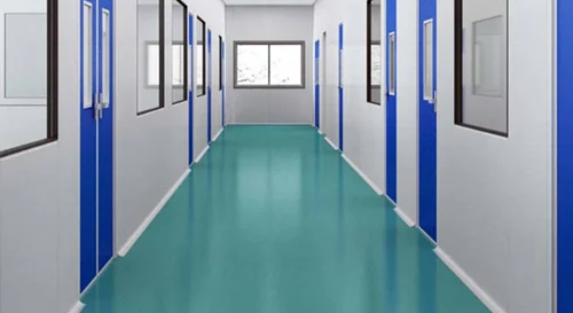
In controlled environments where even microscopic particles can compromise product quality, contamination control is not optional—it is mission-critical. Industries such as pharmaceuticals, biotechnology, electronics, healthcare, and food processing rely heavily on well-designed cleanroom infrastructure to maintain stringent cleanliness standards. At the heart of this infrastructure are Clean Room Panels & Partitions, which play a decisive role in preventing, minimizing, and managing contamination.
This article explains how clean room partitions function as a contamination control mechanism and why selecting the right clean room panel system is essential for regulatory compliance and operational efficiency.
Understanding Contamination Challenges in Clean Room Environments
Contamination control is the cornerstone of clean room performance, especially in highly regulated industries such as pharmaceuticals, biotechnology, electronics manufacturing, healthcare, and food processing. Contaminants can exist in many forms—airborne particles, microorganisms, chemical vapors, or human-generated pollutants such as skin flakes and fibers. Even a minor lapse in contamination control can result in product recalls, regulatory penalties, or operational downtime. This makes the physical structure of a clean room just as important as its HVAC and filtration systems.
At the structural level, Clean Room Panels & Partitions serve as the first line of defense against contamination. Unlike conventional walls, clean room partitions are purpose-built to maintain strict environmental control. They help isolate controlled spaces from surrounding areas, ensuring that external contaminants cannot infiltrate the clean room environment. Without properly designed clean room panel systems, maintaining ISO-classified conditions becomes extremely difficult, regardless of air filtration efficiency.
Another major challenge lies in human activity. Personnel movement, material handling, and equipment operation constantly introduce contamination risks. Clean room partitions help manage these risks by enabling logical zoning, airflow control, and restricted access between different cleanliness levels. By supporting controlled workflows, clean room partitions reduce unnecessary exposure and minimize the spread of contaminants within the facility.
Ultimately, understanding contamination challenges highlights why Clean Room Panels & Partitions are not merely architectural components but critical contamination-control tools. Their design, materials, and installation quality directly impact the clean room’s ability to maintain cleanliness standards consistently over time.
Creating a Sealed and Controlled Clean Room Envelope
One of the most critical functions of Clean Room Panels & Partitions is the creation of a sealed and controlled enclosure. A clean room must operate as a closed system where environmental variables such as particulate count, airflow, pressure, temperature, and humidity can be precisely regulated. Any structural gaps, porous surfaces, or poorly sealed joints can compromise this control, allowing contaminants to enter or escape.
Clean room panel systems are engineered with precision-fit joints, modular interlocking mechanisms, and flush finishes to eliminate gaps and crevices. These features ensure that walls, ceilings, and partitions form a continuous, airtight envelope. Unlike traditional masonry or drywall, clean room panels do not crack, shed particles, or degrade under frequent cleaning and disinfection cycles. This stability is essential for long-term contamination control.
Sealed clean room partitions also support effective pressure management. Positive pressure environments prevent contaminants from entering cleaner zones, while negative pressure areas contain hazardous or sensitive processes. Clean Room Panels & Partitions enable these pressure differentials by preventing air leakage through walls and partition interfaces. Without a properly sealed structure, pressure control becomes inefficient and unpredictable.
In addition, sealed clean room partitions simplify validation and compliance processes. Regulatory bodies require documented proof that clean rooms maintain controlled conditions consistently. A well-sealed panel system reduces variability, making it easier to pass certification audits and routine inspections. In this way, Clean Room Panels & Partitions play a foundational role in ensuring structural integrity, environmental stability, and regulatory compliance.
Supporting Controlled Airflow and Pressure Differentials
Airflow management is one of the most effective contamination control strategies in clean room design. Clean rooms rely on carefully engineered airflow patterns to remove airborne particles and prevent contamination from spreading. Clean Room Panels & Partitions play a vital role in supporting these airflow systems by providing stable, non-leaking boundaries that guide air movement as intended.
In most clean rooms, laminar airflow systems are used to direct filtered air uniformly across the workspace. Clean room partitions help maintain this airflow pattern by preventing turbulence caused by air leaks or uneven surfaces. Smooth panel finishes and flush-mounted components allow air to flow consistently, reducing particle deposition on walls and equipment.
Pressure differentials between rooms are another critical aspect of contamination control. Cleaner areas are typically maintained at higher pressure than adjacent spaces, ensuring that air flows outward rather than inward. Clean Room Panels & Partitions help sustain these pressure gradients by forming airtight separations between zones. Any compromise in panel sealing can lead to pressure loss and reverse airflow, increasing contamination risk.
Additionally, clean room partitions enable the creation of multiple controlled zones within a facility. These zones may have different cleanliness classifications, airflow rates, or pressure requirements. Modular clean room panel systems allow designers to configure spaces that meet specific operational needs while maintaining overall environmental control.
By working in tandem with HVAC and filtration systems, Clean Room Panels & Partitions ensure that airflow and pressure strategies function effectively. This integration is essential for achieving consistent contamination control and maintaining clean room performance over time.
Reducing Particle Accumulation Through Surface Design
Surface design plays a significant role in contamination control, particularly in environments where frequent cleaning and sterilization are required. Clean Room Panels & Partitions are specifically designed with smooth, non-porous surfaces that minimize particle accumulation and microbial growth. This design advantage distinguishes clean room panels from conventional construction materials.
Traditional walls often contain joints, textures, or porous materials that trap dust and harbor microorganisms. In contrast, clean room panels feature flat, seamless surfaces that are easy to clean and disinfect. Powder-coated steel, pre-painted galvanized iron (PPGI), and antimicrobial laminate finishes are commonly used to enhance cleanliness and durability.
The absence of cracks, ledges, and exposed fasteners reduces the likelihood of particle shedding. This is especially important in high-grade clean rooms where even microscopic particles can compromise product quality. Clean Room Panels & Partitions help maintain low particle counts by eliminating surfaces where contaminants can settle and accumulate.
Chemical resistance is another important factor. Clean room environments often require aggressive cleaning agents and disinfectants. Clean room panels are designed to withstand repeated exposure to these chemicals without degrading, peeling, or releasing particles. This ensures long-term contamination control without increasing maintenance costs.
By promoting effective cleaning and reducing contamination reservoirs, clean room panel surfaces contribute significantly to hygiene management. Over time, this results in improved operational efficiency, reduced cleaning downtime, and greater confidence in contamination control measures.
Preventing Cross-Contamination Through Zoning and Segregation
Cross-contamination is a major risk in facilities with multiple processes, products, or cleanliness levels. Clean Room Panels & Partitions are essential for establishing clear physical separation between different zones, helping to control the movement of personnel, materials, and air.
Clean room zoning allows facilities to assign specific cleanliness classifications to different areas, such as gowning rooms, production zones, packaging areas, and support spaces. Clean room partitions act as physical barriers that prevent contaminants from migrating between these zones. This is particularly important in pharmaceutical and biotechnology facilities, where cross-contamination can lead to serious regulatory violations.
Partitions also support controlled personnel flow. By defining entry and exit points, clean room panels help enforce gowning procedures and directional movement. This reduces unnecessary traffic through critical areas and minimizes contamination introduced by human activity.
Material transfer is another potential contamination source. Clean Room Panels & Partitions enable the integration of pass boxes and transfer hatches that allow materials to move between zones without exposing clean environments to external contaminants. These controlled transfer points significantly reduce contamination risk.
Through effective zoning and segregation, clean room partitions provide operational clarity and contamination control. They ensure that each area functions within its intended cleanliness parameters, supporting both product quality and regulatory compliance.
Conclusion: Clean Room Panels & Partitions as a Contamination Control Backbone
Effective contamination control depends on more than air filtration and operational discipline—it requires a structurally sound, purpose-built environment. Clean Room Panels & Partitions form the backbone of this environment by creating sealed enclosures, supporting airflow control, minimizing particle accumulation, and preventing cross-contamination.
Their modular design, smooth surfaces, and compliance-ready construction make clean room panels an indispensable component of modern clean room facilities. When properly designed and installed, clean room partitions not only protect product integrity but also improve operational efficiency, simplify maintenance, and support long-term scalability.
For organizations operating in contamination-sensitive industries, investing in high-quality Clean Room Panels & Partitions is a strategic decision that directly impacts quality assurance, regulatory compliance, and overall business performance.