
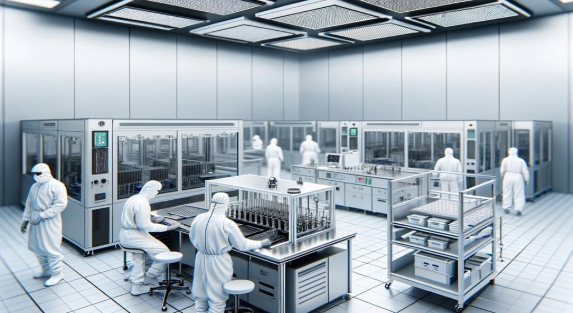
In industries where precision, hygiene, and consistency define success, maintaining an immaculate production environment is crucial. From pharmaceutical labs to semiconductor manufacturing, air purity determines not only the quality of the final product but also the safety of those involved in its creation. A single microscopic particle or microbial contaminant can lead to costly product recalls, operational downtime, or even health risks. This is where a Cleanroom Particle Filtration System plays an indispensable role. It ensures that airborne contaminants are removed before they can impact sensitive manufacturing processes.
A cleanroom filtration system is designed to meet strict international standards such as ISO 14644, ensuring every particle count stays within acceptable limits. The system doesn’t just protect products—it safeguards the entire production ecosystem, creating a controlled environment where quality and safety thrive. Whether it’s a biotechnology cleanroom requiring ultra-sterile conditions or an electronics plant demanding dust-free zones, an efficient filtration system acts as the invisible backbone of every successful operation.
In this detailed article, we’ll explore how Cleanroom Particle Filtration Systems influence product quality, worker safety, regulatory compliance, and long-term efficiency. We’ll also highlight why investing in high-performance filtration solutions is essential for industries aiming for excellence and reliability.
1. Understanding Cleanroom Filtration and Its Functionality
A Cleanroom Particle Filtration System is not merely a set of filters—it’s an engineered system that ensures air purity through multiple stages of filtration and circulation. Typically, these systems include pre-filters, HEPA (High-Efficiency Particulate Air) filters, and ULPA (Ultra-Low Penetration Air) filters, each serving a specific function in removing airborne contaminants.
Air enters the cleanroom through the system, passing first through pre-filters that capture larger dust and debris. It then travels through HEPA or ULPA filters, which can trap 99.97% to 99.999% of particles as small as 0.12 microns. The clean air is distributed in a controlled manner—usually via laminar flow systems that direct air evenly across work areas. This eliminates turbulence and ensures that contaminants are continuously flushed out.
In environments like pharmaceutical manufacturing, filtration prevents bacteria, mold spores, and particulates from contaminating sterile products. In semiconductor fabrication, it prevents dust and static particles from damaging microchips or sensors. The system also maintains positive or negative pressure differentials, depending on the cleanroom type—positive pressure protects the product, while negative pressure protects personnel handling hazardous materials.
In essence, cleanroom filtration systems function as the lungs of controlled environments—constantly breathing in, purifying, and redistributing clean air to sustain product integrity and workplace safety. Without them, contamination control would be virtually impossible.
2. Impact on Product Quality and Manufacturing Efficiency
Product quality is inseparable from air quality in controlled manufacturing. A well-functioning Cleanroom Particle Filtration System ensures that every component of the product—whether a vaccine vial, circuit board, or optical lens—is manufactured in an environment free of unwanted contaminants.
For example, in the biotechnology and pharmaceutical sectors, even trace amounts of dust or microbial particles can compromise sterility, leading to failed quality control tests or product recalls. Cleanroom filtration systems maintain stringent air cleanliness levels that comply with ISO and GMP (Good Manufacturing Practice) guidelines. By filtering out particles and microorganisms, they preserve the integrity of sensitive compounds and formulations.
Similarly, in electronics manufacturing, minuscule dust particles invisible to the naked eye can ruin microprocessors or sensors. A single contaminant can lead to short circuits or defects in semiconductor wafers, causing massive production losses. A robust cleanroom filtration setup minimizes such risks, ensuring consistent product quality, yield efficiency, and reduced rework costs.
Moreover, high-efficiency filters and optimized airflows contribute to process uniformity and stability. By maintaining consistent environmental parameters—temperature, humidity, and air pressure—the system ensures that every production batch meets the same stringent quality criteria. In a competitive market, this consistency not only prevents waste but also strengthens brand reliability and customer trust.
Ultimately, cleanroom filtration systems are the unseen quality guardians that silently uphold the standards of modern manufacturing excellence.
3. Enhancing Safety and Regulatory Compliance
Safety and compliance go hand in hand in industries governed by strict contamination control regulations. A well-maintained Cleanroom Particle Filtration System is essential not only for product safety but also for protecting employees and ensuring regulatory adherence.
In pharmaceutical cleanrooms, filtration systems prevent cross-contamination between active ingredients, safeguarding both product purity and worker health. In biosafety laboratories, negative-pressure filtration setups ensure hazardous pathogens remain contained within the cleanroom, preventing environmental contamination. Similarly, in microelectronics or aerospace facilities, the same systems protect delicate components from external particulates.
Regulatory bodies such as the ISO, FDA, GMP, and EU Annex 1 mandate strict guidelines for air cleanliness and validation testing. Routine performance checks—such as airflow visualization, filter integrity testing, and particle count measurements—are integral to maintaining compliance. A lapse in filtration efficiency could result in non-compliance penalties, production halts, or rejected product batches.
Furthermore, a reliable Cleanroom Filtration System improves occupational safety by reducing airborne pollutants that could cause respiratory or allergic reactions. It fosters a safer, cleaner, and more controlled work environment for all personnel.
Investing in a high-quality, compliant filtration system isn’t just about meeting standards—it’s about upholding responsibility. When safety and quality are prioritized through effective filtration, manufacturers protect their workforce, their products, and their reputation simultaneously.
4. Energy Efficiency and Long-Term Operational Benefits
A modern Cleanroom Particle Filtration System doesn’t just focus on cleanliness—it also integrates sustainability and energy efficiency into its design. Cleanrooms are energy-intensive environments, with air filtration and conditioning accounting for up to 60% of total power consumption. Therefore, optimizing these systems is vital for both environmental and economic reasons.
High-efficiency filters, variable air volume controls, and intelligent airflow sensors now form part of advanced cleanroom setups. These technologies monitor real-time particle levels and adjust fan speeds or airflow patterns automatically, maintaining purity while minimizing energy waste. Some systems employ low-pressure-drop filters, which reduce energy use without compromising filtration performance.
Proper maintenance—like timely filter replacement and duct cleaning—further enhances longevity and reduces operational costs. Neglected or clogged filters can overwork fans, increase pressure resistance, and lead to higher energy consumption. By implementing predictive maintenance using IoT-enabled monitoring, facilities can identify potential issues early and prevent downtime.
Beyond cost savings, energy-efficient filtration systems contribute to sustainability goals—a growing priority in industries worldwide. Reducing energy waste also lowers the facility’s carbon footprint, aligning operations with green manufacturing practices.
In the long run, an efficient cleanroom filtration system delivers consistent air purity, operational stability, and measurable savings—making it a smart investment for any forward-thinking enterprise.
5. Why Choosing the Right Filtration System Matters
Selecting the right Cleanroom Particle Filtration System is a strategic decision that determines the success of your cleanroom operations. The ideal system should match your cleanroom’s ISO classification, application type, and process sensitivity. For instance, semiconductor facilities may prioritize ultra-low particulate control, while pharmaceutical labs may emphasize microbial contamination resistance.
Partnering with a reputable cleanroom solutions provider ensures access to quality components, professional installation, and ongoing technical support. Such experts can perform site assessments, airflow design calculations, and compliance validation to guarantee that the filtration setup meets global standards.
Moreover, reliable suppliers provide certified filters, pre-tested systems, and documentation that supports audits and inspections. They also offer maintenance services that keep performance consistent over time. With the right partnership, businesses can focus on productivity while ensuring contamination control is continuously upheld.
Ultimately, the goal is not just to filter air—but to build trust in your manufacturing process. When your cleanroom filtration system functions flawlessly, you deliver products that are pure, safe, and compliant—cementing your brand’s reputation for quality and reliability.
Conclusion
A Cleanroom Particle Filtration System is far more than an air-cleaning device—it’s a critical infrastructure that underpins modern manufacturing. By ensuring the highest levels of air purity, it directly influences product quality, worker safety, and regulatory compliance. Whether in pharmaceuticals, biotechnology, or electronics, cleanroom filtration defines excellence and trust.
Investing in a high-performance system and maintaining it diligently transforms your cleanroom into a hub of precision, consistency, and innovation. In an era where quality defines competitiveness, an efficient filtration system isn’t just an advantage—it’s a necessity.