
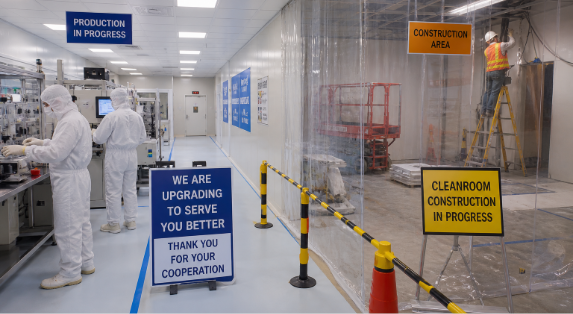
Maintaining uninterrupted operations while your cleanroom is under construction is not just a logistical challenge—it’s a strategic necessity. Whether you operate in pharmaceuticals, biotechnology, electronics, or healthcare, downtime can translate into lost revenue, compliance risks, and operational inefficiencies. That’s where Clean Rooms Solutions come into play, offering structured approaches to ensure continuity without compromising quality or safety.
In this comprehensive guide, we’ll explore practical, proven strategies to help you sustain operations during construction, while also integrating modern cleanroom solutions. We’ll also highlight how partnering with industry experts like Ziebaq can streamline the entire process.
Phased Construction Planning
Phased construction is one of the most effective Clean Rooms Solutions for ensuring business continuity during facility upgrades or new cleanroom builds. Instead of halting all operations, the facility is divided into controlled zones where construction and production occur sequentially. This approach minimizes disruption while maintaining compliance with strict environmental standards such as ISO classifications and GMP requirements.
A well-structured phased plan begins with a detailed site assessment. Engineers and cleanroom consultants evaluate airflow dynamics, existing layouts, and operational dependencies. Based on this analysis, construction is scheduled in phases, ensuring that critical production areas remain functional. Physical barriers such as temporary walls, airlocks, and containment curtains are installed to isolate construction zones from operational areas. These barriers are essential components of advanced clean room solutions, preventing cross-contamination and maintaining environmental integrity.
Another key aspect of phased construction is workflow optimization. Operational teams must adapt to temporary changes in layout, which may involve rerouting personnel and material flow. Ziebaq specializes in designing efficient phased execution strategies that reduce bottlenecks and maintain productivity. Their expertise ensures that each phase transitions smoothly into the next without compromising quality or safety.
Additionally, phased construction allows for continuous validation and testing. Each completed section can be tested for compliance before moving on to the next phase. This incremental validation reduces the risk of large-scale failures and ensures that the final cleanroom meets all regulatory standards.
Ultimately, phased construction is not just about dividing work—it’s about integrating construction with ongoing operations. By leveraging professional Clean Rooms Solutions, businesses can achieve a balance between progress and productivity, ensuring that construction enhances rather than disrupts operations.
Temporary Cleanroom Solutions
Temporary setups are among the most practical clean room solutions when permanent facilities are under construction. These solutions provide a controlled environment that meets required cleanliness standards, allowing critical operations to continue without interruption. They are particularly valuable in industries such as pharmaceuticals, biotechnology, and electronics, where even minor contamination can lead to significant losses.
Temporary cleanrooms come in various forms, including modular cleanrooms, softwall enclosures, and portable units. Modular cleanrooms are highly customizable and can be quickly assembled within existing facilities. Softwall cleanrooms, on the other hand, offer flexibility and cost-effectiveness, making them ideal for short-term use. Portable units provide mobility and can be relocated as construction progresses, ensuring continuous operational support.
One of the key advantages of temporary cleanroom setups is their scalability. Businesses can expand or reduce the size of these units based on operational needs. Ziebaq offers tailored Clean Rooms Solutions that include the design, installation, and validation of temporary cleanrooms, ensuring they meet industry-specific standards. Their solutions are engineered to integrate seamlessly with existing workflows, minimizing disruption.
Another critical factor is environmental control. Temporary cleanrooms are equipped with HEPA or ULPA filtration systems, maintaining air purity and controlling particle levels. Advanced monitoring systems ensure that temperature, humidity, and pressure remain within acceptable limits. These features make temporary setups reliable alternatives to permanent cleanrooms during construction.
In addition to technical benefits, temporary cleanrooms also support regulatory compliance. Proper documentation, validation, and monitoring ensure that operations remain audit-ready. By investing in high-quality clean room solutions, businesses can maintain productivity and compliance simultaneously.
In summary, temporary cleanrooms are not just stopgap measures—they are strategic assets. With the right planning and expert support from Ziebaq, these solutions enable seamless operations even in the midst of complex construction projects.
Zoning, Containment, and HVAC Management
Effective zoning and containment are critical components of Clean Rooms Solutions when operating during construction. Without proper segregation, construction activities can introduce contaminants that compromise cleanroom integrity. Therefore, creating distinct zones for construction and operations is essential to maintain environmental control.
Zoning begins with physical separation. Hard barriers, plastic partitions, and airlocks are used to isolate construction areas. These barriers are designed to prevent the movement of dust, debris, and airborne particles into operational zones. In addition, maintaining pressure differentials is crucial. Construction zones are typically kept under negative pressure, ensuring that contaminants do not escape into clean areas. This is a fundamental principle in advanced clean room solutions.
HVAC systems play a pivotal role in maintaining air quality during construction. Upgrading filtration systems, such as HEPA or ULPA filters, ensures that airborne particles are effectively removed. Increasing air change rates further enhances air purity, reducing the risk of contamination. Ziebaq integrates intelligent HVAC strategies into their Clean Rooms Solutions, allowing real-time adjustments based on environmental conditions.
Another important aspect is airflow management. Proper airflow patterns prevent stagnant zones where contaminants can accumulate. Computational fluid dynamics (CFD) analysis is often used to optimize airflow design, ensuring consistent environmental conditions across the facility. Continuous monitoring systems track parameters such as particle counts, temperature, humidity, and pressure, enabling immediate corrective actions if deviations occur.
Personnel protocols also contribute to effective containment. Separate entry and exit points for construction and operational staff reduce cross-contamination risks. Strict gowning procedures and dedicated PPE further enhance control measures. These practices are integral to maintaining compliance with industry standards.
In conclusion, zoning, containment, and HVAC management are interconnected elements that ensure operational continuity during construction. By implementing robust clean room solutions and leveraging the expertise of Ziebaq, businesses can maintain strict environmental control, ensuring both productivity and compliance throughout the construction process.
Compliance, Monitoring, and Risk Management
Maintaining compliance during cleanroom construction is non-negotiable. Regulatory standards such as ISO and GMP require strict adherence to environmental and operational protocols, even during facility upgrades. This is where comprehensive Clean Rooms Solutions become indispensable, ensuring that all activities align with regulatory requirements while operations continue uninterrupted.
Compliance begins with thorough documentation. Standard Operating Procedures (SOPs) must be updated to reflect construction-related changes. Risk assessments should identify potential contamination sources and outline mitigation strategies. Ziebaq provides end-to-end support in developing compliance frameworks, ensuring that all processes meet industry standards. Their expertise in clean room solutions helps businesses navigate complex regulatory landscapes with confidence.
Real-time monitoring is another critical component. Advanced systems continuously track environmental parameters such as particle counts, air pressure, temperature, and humidity. These systems provide instant alerts if conditions deviate from acceptable ranges, allowing immediate corrective action. Continuous monitoring not only ensures compliance but also enhances operational reliability.
Risk management involves proactive planning and contingency measures. Potential risks include equipment failures, contamination incidents, and construction delays. A robust risk management plan outlines response strategies for each scenario, minimizing downtime and ensuring quick recovery. Ziebaq integrates risk mitigation strategies into their Clean Rooms Solutions, providing businesses with a safety net during construction.
Training and communication are equally important. Staff must be trained on new protocols, including zoning rules, PPE usage, and emergency procedures. Regular communication between construction teams, operational staff, and quality assurance teams ensures alignment and reduces the likelihood of errors.
Finally, validation and testing are essential to confirm that cleanroom conditions meet required standards. Each phase of construction should undergo validation before moving forward. This incremental approach reduces risks and ensures that the final facility is fully compliant.
In summary, compliance, monitoring, and risk management form the backbone of successful cleanroom operations during construction. By adopting advanced clean room solutions and partnering with experts like Ziebaq, businesses can maintain regulatory compliance while achieving operational continuity and long-term success.