
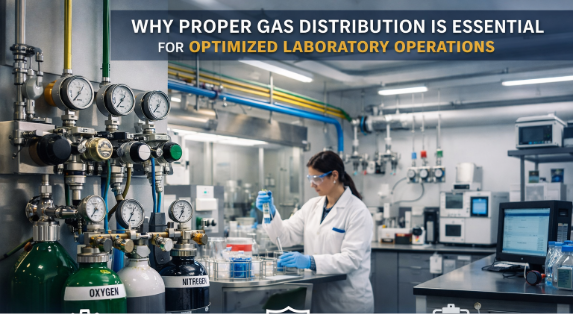
In modern laboratories, precision, safety, and efficiency are non-negotiable. Whether it’s a pharmaceutical lab, research facility, or industrial testing unit, the backbone of many operations lies in a well-designed Laboratory Gas Distribution System. Without a reliable gas supply infrastructure, even the most advanced equipment can fail to deliver accurate results.
This article explores why a proper laboratory gas distribution system is critical, how it impacts overall lab performance, and why partnering with experts like Ziebaq can make a significant difference.
Understanding the Laboratory Gas Distribution System
A Laboratory Gas Distribution System is a critical infrastructure component that ensures the safe, controlled, and uninterrupted flow of gases throughout a laboratory environment. In modern labs—whether pharmaceutical, chemical, biotech, or research-based—various gases such as oxygen, nitrogen, hydrogen, argon, and compressed air are required for daily operations. These gases must be delivered with precision, consistency, and safety, which is exactly what a well-designed laboratory gas pipeline system accomplishes.
Instead of relying on individual gas cylinders placed at different workstations, a centralized lab gas distribution system connects gas sources to multiple endpoints through a network of pipelines, valves, and regulators. This system is engineered to maintain optimal pressure levels and gas purity, which are crucial for achieving accurate experimental outcomes. It also reduces the risks associated with manual cylinder handling, such as leaks, contamination, and operational delays.
A robust laboratory gas distribution system typically includes high-grade piping (often stainless steel), pressure regulators, control panels, safety valves, and alarm systems. These components work together to create a seamless and efficient gas delivery network. Moreover, modern systems are designed with scalability in mind, allowing laboratories to expand or modify their setups without major disruptions.
Organizations like Ziebaq specialize in designing customized gas distribution solutions tailored to specific laboratory needs. Their expertise ensures that every component is optimized for performance, safety, and compliance. Ultimately, understanding the structure and function of a laboratory gas distribution system is the first step toward building a high-performing and future-ready laboratory environment.
Enhancing Efficiency and Workflow Through Proper Gas Distribution
Efficiency is the backbone of any successful laboratory, and a well-designed Laboratory Gas Distribution System plays a pivotal role in achieving it. Laboratories often operate under tight deadlines, where even minor disruptions can lead to significant delays in research, testing, or production. An optimized lab gas distribution system ensures a continuous and stable supply of gases, eliminating downtime caused by manual cylinder replacements or inconsistent pressure levels.
When gas supply is centralized and automated, lab personnel can focus entirely on their core tasks rather than managing gas logistics. This leads to improved workflow, faster experiment execution, and higher productivity. A properly installed laboratory gas pipeline system also ensures uniform gas delivery across all workstations, which is essential for maintaining consistency in experimental results.
Another advantage is the reduction of clutter within the lab. With a centralized laboratory gas distribution system, bulky cylinders are stored in designated areas rather than scattered across workspaces. This not only improves organization but also enhances mobility and accessibility for lab staff. A cleaner and more structured environment naturally contributes to better efficiency.
Furthermore, advanced systems designed by companies like Ziebaq incorporate smart controls and monitoring features. These allow real-time tracking of gas usage, pressure levels, and system performance, enabling proactive maintenance and minimizing unexpected failures.
In essence, a well-planned laboratory gas distribution system transforms laboratory operations by streamlining processes, reducing manual intervention, and ensuring that every experiment runs smoothly. It is not just an infrastructure upgrade—it is a strategic investment in operational excellence.
Ensuring Safety and Regulatory Compliance
Safety is a non-negotiable aspect of laboratory operations, and the importance of a reliable Laboratory Gas Distribution System cannot be overstated in this context. Laboratories deal with gases that can be flammable, toxic, or reactive, making proper handling and distribution absolutely essential. A poorly designed lab gas distribution system can lead to leaks, pressure imbalances, or even hazardous accidents, putting both personnel and research at risk.
A professionally engineered laboratory gas pipeline system incorporates multiple safety features to mitigate these risks. These include leak detection systems, emergency shut-off valves, pressure regulators, and proper ventilation integration. Such features ensure that any irregularities are quickly identified and addressed before they escalate into serious issues. Additionally, centralized systems reduce the need for frequent manual handling of gas cylinders, which is a common source of accidents in traditional setups.
Compliance with industry standards is another critical factor. Laboratories must adhere to regulations such as ISO guidelines, GMP standards, and local safety codes. A high-quality laboratory gas distribution system ensures that all these requirements are met, helping organizations avoid legal complications and maintain their credibility.
Companies like Ziebaq are known for designing systems that prioritize both safety and compliance. Their solutions are tailored to meet international standards while addressing the unique needs of each laboratory.
Ultimately, investing in a robust laboratory gas distribution system is an investment in safety. It protects not only the people working in the lab but also the integrity of the research and the reputation of the organization.
Maintaining Gas Purity and Experimental Accuracy
In scientific research and testing, accuracy is everything. Even the slightest impurity or inconsistency can compromise results, leading to incorrect conclusions or failed experiments. This is where a high-quality Laboratory Gas Distribution System becomes indispensable. It ensures that gases are delivered in their purest form, maintaining the integrity of every process within the lab.
A well-designed lab gas distribution system uses materials like stainless steel or specialized copper piping that resist corrosion and contamination. These materials prevent external elements from affecting the gas composition as it travels through the system. Additionally, advanced filtration and regulation mechanisms ensure that gases are delivered at the correct pressure and purity levels required for specific applications.
Consistency is another critical factor. A reliable laboratory gas pipeline system provides a steady and uniform gas supply across all workstations. This uniformity is essential for reproducibility, which is a cornerstone of scientific research. Without it, experiments may yield inconsistent results, making it difficult to validate findings.
Modern solutions offered by Ziebaq are designed to maintain stringent quality standards. Their systems are engineered to minimize contamination risks and ensure that every gas delivered meets the required specifications.
In conclusion, a properly implemented laboratory gas distribution system directly impacts the quality and reliability of laboratory outcomes. By ensuring gas purity and consistency, it enables researchers and technicians to achieve precise and dependable results, which are crucial for innovation and progress.
Cost Efficiency, Scalability, and Future-Ready Laboratories
While the initial setup of a Laboratory Gas Distribution System may require a significant investment, its long-term benefits far outweigh the costs. One of the most notable advantages is cost efficiency. A centralized lab gas distribution system minimizes gas wastage by ensuring precise control over flow and pressure. It also reduces the need for frequent cylinder replacements and manual handling, leading to lower operational expenses over time.
Scalability is another key benefit. As laboratories grow or evolve, their requirements change. A modular laboratory gas pipeline system allows for easy expansion, enabling new workstations or equipment to be integrated without major structural changes. This flexibility is particularly valuable for research facilities and industries that operate in dynamic environments.
Additionally, modern laboratories are moving toward automation and smart infrastructure. Advanced laboratory gas distribution systems now include features such as IoT-based monitoring, automated controls, and real-time data analytics. These innovations enhance efficiency, improve safety, and enable predictive maintenance, reducing the likelihood of unexpected failures.
Companies like Ziebaq are at the forefront of this transformation, offering solutions that are not only efficient but also future-ready. Their systems are designed to adapt to emerging technologies and evolving industry standards.
In summary, a well-planned laboratory gas distribution system is more than just a utility—it is a strategic asset. It reduces costs, supports growth, and prepares laboratories for the future, making it an essential component of optimized laboratory operations.